If you're currently working toward your Board for Certification of Genealogists (BCG) portfolio as I am, or on any large project, you probably realize how quickly time escapes us!
I started "on the clock" on May 30th, and already, the first quarter nears its end! Time to make a plan...
So far, I seem to have gotten stuck on working with an estate file which proved the relationship of a group of ancestors. Working with land divisions is interesting...but there's so much more to accomplish! No time to let details and tangents hold me back!
I think I need to go back to the requirements page (there are seven parts to a completed portfolio), and make an outline with some established goals for completion.
First things first...
While there is an excellent section of FAQs provided by BCG for the research portfolio requirement, and also a very helpful Six-Month Cycle Timeline provided on the website, I have decided that for myself, I need to work on the kinship determination project throughout the year so I don't get caught short of my expectations by the time the alarm goes off on May 30, 2014!
The first thing I did was to print out a descendants report for the four generations I plan on using for my kinship determination narrative (Part 7 of the BCG Requirements). That narrowed it down to four pages of names.
I then broke down the list into six equal parts, keeping family groups intact, so that I now have sections to be completed by September, October, November, December, January and February. While the website offers a twelve-month timeline, I've decided to work on the six-month cycle in order to allow more time for additional research, edits and re-writes.
I made a list of the types of records I needed to round out the narrative for each person, and then searched online repository indexes for those names, keeping a list of the repository name, type of record, and person connected to the record.
Then I printed out a copy of my genealogy software's (Legacy 7.5) Descendants Narrative for Isaac Carter, limiting the generations to four, including his. One nice thing about this is that there are blanks drawn for each missing piece of information which will alert me to find answers to these questions.
I am fully aware that these reports do not fulfill the requirement for BCG Certification, but they do help me to remain focused on my research boundaries for this project.
Ready...set...go...
Now that I have a framework to reign me in, I hope to stay on target for the remaining nine months...enough time to birth a portfolio!
The other day I had a Facebook exchange with a fellow genealogist regarding the valuable resource of FamilySearch.org. This researcher was looking for estate records for South Carolina, and since my husband's maternal line descends from Horry County, I continued to tell her about the records on FamilySearch.org, until I rediscovered why I had chosen to work on my husband's paternal line from North Carolina: not all states' records are represented equally on the site, by far! Browsing records by location
In case you've never searched using the "browse the records" method, here is the process:
After signing in and clicking on the "Search" option, scroll down to the bottom of the page and click on the country file you would like to explore. For this purpose, I'll be clicking on "United States."
On the left side of the screen you will find a listing of states to select from. I'll be clicking on "South Carolina" for the purpose of this demonstration.
There are two options provided for Probate Records here: "Bound Volumes, 1671-1977", and "Files and Loose Papers, 1732-1964." This looks promising!
First we'll take a look at the Bound Volumes. Robert Livingston, the master of Frank Livingston and family, lived in Little River, Horry, South Carolina, USA. So, let's take a look and see if we can find Horry County here. Click on "Browse Images." Sadly, you will find that Horry County is not among the available records.
North Carolina Estate Files, 1663-1979 contains 4, 120, 631 images. Currently, I am working on Carter, Dove and Perkins records; but, the primary emphasis at this time is the Estate File of Isaac Dove.
He was the father of three women who married into the Carter, Fenner and Godette families, and two sons who married Carter and Gaudett women. Note the two different spellings of the Godette family here; yet, they are of the same family. Another spelling variation I have found is Godett. Sometimes there are spelling variations for the same people within the same document. The same is true of given names, evident especially in Isaac Dove's daughter Susannah's name variations: Susannah, Susan and Sukey.
The county records are organized alphabetically by surname.
What's coming up on In Black and White...
While some of the records I will be sharing here on the blog are related to my BCG porfolio, I will not be discussing them within the context of the family. That would be a violation of the terms of certification. I will, however, share transcriptions of records I am working on.
As far as building my family tree documentation within Legacy 7.5, I will share with you how I've attached records to the individuals recorded within the pages of the estate files. This can be done with other databases as well. By keeping record images attached to the vital and event statistics they support, it becomes easier to work on proving relationship and establishing estimated dates when no specifics are stated.
Last week I revealed the start of a new phase in my genealogical endeavors...BCG Certification. This is a one year project whereby I assemble seven parts of a portfolio, and submit it to be judged for professional credentials. My deadline for submission is
May 30, 2014.
I suppose some or even most people might prepare each section of the portfolio consecutively:
Genealogist's Code
Background Resume
BCG Supplied Document Work
Applicant Supplied Document Work
Research Report Prepared for a Client
Case Study: Conflicting or Indirect Evidence
Kinship-Determination Project.
However, the combination of management multi-tasking skills and ADHD make for the perfect solution of thinking and planning for all seven categories at once, while making strides on the one part of the process I believe to be most demanding and time consuming...the kinship-determination project.
Tip #1: Organize, organize, organize
Since I've been compiling sources for my husband's family tree since 2005 and have relocated several times during that period, I have tried to (at least I thought I did) file my documents carefully in binders by family groups. But when I began checking each fact in my family tree database, I discovered that not every document was in its proper place. So, the first tip is to organize all paper documents according to family groups as soon as you print them. This saves you from the hassle of hunting them up and wasting precious time on your project.
Tip #2: Scan, upload & attach
Okay...so you've organized all those photocopies and printed documents into your paper file system. Now what?! The next thing you should do is scan existing paper documents, or download digital documents; and then, upload & attach them to the individuals in your family tree database. This makes life so much easier when working on your proofs.
Tip #3: Make research notes
Alright. Everything is now in its proper place. Now what? What do you do with all those vital records, census sheets, land deeds, wills and probate documents now that they're attached? Is that it? Not quite. The next step is to abstract & analyze the facts. Do your documents really prove your conclusions? I discovered that I had written down a date of death for one ancestor, but because I didn't make any notes at the time I entered the data, I couldn't remember how I came to that conclusion. And after looking at all the records I had in front of me, there were still some missing pieces to the proof puzzle. A good place to put these notes is in the research notes section for that individual in your database.
Tip #4: Enter complete source info
There's not much worse than trying to remember where you got that fact seven or ten years ago! While my usual practice is to put printed documents in a sleeve protector affixed with a label, including:
Author(s)
Title
Publisher, place & date
Volume & page number
Repository
Date found
...there have been instances where I was in a hurry, as when printing obituaries from microfilm at a library when on vacation.... In some of those cases I may have put all the pages into an envelope marked with some crude penciled-in notes, i.e. the reel #, newspaper & date...or maybe not...and later on, the more those documents got handled the more likely I was to lay them aside and forget about performing the steps above. Days, months or even years later I now find myself questioning:
Now why did I get this document? Where does it belong?
So, the best way to avoid trouble is to carefully write the bibliographic info onto the back of each document as soon as you print it, and then follow the above steps at your earliest convenience.
You may think you have a pretty well proven family tree, but if your relationships and events are not fully documented, abstracted, analyzed and sourced, you may run into problems down the branch!
I've been silent for a couple months, but not still.
So much has happened since the Family History Writing Challenge this past February! I had continued to work on my family history memoir for most of April and into the first part of May. Then, suddenly, I hit an emotional road block....
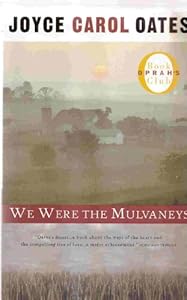
During that time I read Joyce Carol Oates', We Were the Mulvaneys. At the start of the book, I had just subscribed to Suzanne Windsor Freeman's blog, write it sideways: Writing advice from a fresh perspective, and received her free Resource Wrap-Up, Read Better, Write Better Novel
Study Workbook for Aspiring Novelists.
I printed out the template: but since most of my reading time is during lunch breaks at work, I found it difficult to follow through with the workbook pages.
I did, however, keep in mind some of the elements Suzanne encourages writers/readers to think about as they read.
The book details the affects of a traumatic event in the life of Marianne Mulvaney upon herself and her parents and siblings. While reading, the one element that became more apparent was the author's narrative voice, which could be described as an alternating point of view, vacillating between the first-person character voice of Judd, and third person omniscient.
In that way, Oates was able to tell the story from the brother/son's perspective and still be able to fill in the gaps with scenes of how the event affected the others. This was the first time I have ever read a book whereby the author did not use the same narrative voice throughout; and, in this case it proved most effective.
I don't want to be a professional genealogist. After my experience with owning a sole proprietorship, I don't want to go through that again...
But then I began to think of it as the first piece of my 5-year plan. When I had tried to apply for graduate school in the past, I could not get the required two or three professors or colleagues who were familiar with my work to write letters of recommendation for my application package.
Since I graduated with the class of 1983, most of my professors who remembered me from the University of Massachusetts at Amherst were deceased...the sole surviving writing professor who acknowledged my work I dared not ask since I am yet unpublished.
And of the professors at Houghton College, none <sadly> remembered me....a small school, yet lost as a fish in the vast sea of academia. Even sadder yet was the fact that those who had remembered me from UMASS/Amherst had only had me as a student in one (1) class. Imagine that!
So, the question of certification changed from that of working as a professional genealogist to one of making current connections through submitting a professional portfolio to those who might one day write a letter of recommendation to a graduate school offering a dual Masters degree in Library and Information Science (MLIS) and Public Records and Archives Management.
The Five-Year Plan
With a new hopeful perspective, I devised this rigorous, yet realistic plan toward reaching my goal:
BCG Certification,
study for and take the Graduate Records Exam (GRE),
apply for and complete a dual Masters degree in the areas listed above, and finally,
change careers from Deli Manager to the start of a whole new career in research/writing/records management.
On the Clock...
On June 12th my Facebook status read:
I'm so excited! Just received my Category Application packet from Board for Certification of Genealogists (BCG) in the mail today! Took a look at the document they supplied and am even MORE psyched!
...to which my husband replied...
(PLEASE NOTE:
most effective if you view the clip while reading the the comment below)
"The
5-year plan... to explore strange new (genealogical) worlds, to seek out new
life (information) and new (formerly unknown) civilizations (cultures)... to
boldly go (inquire and discover) where no man (or woman genealogist) has gone
before... FAMILY TREK!!! I'm sorry folks... I couldn't resist (must have been
those BORG ancestors).
By May 30, 2014 I expect to have submitted my BCG portfolio and then or shortly thereafter to have received professional certification....the completion of step one in the five-year plan.
What you can expect to see on the blog...
With a new focus and determination, you can expect to see some new things as I share the process of assembling a professional genealogical portfolio...although I will not be able to share any specifics of my BCG presentation.
You can also expect to see a continuation of the series: The Civil War Pension File of Isaac Carter, as well as side-notes for the continuation of The Family History Memoir on Adventures of Family History Writing, and more commentaries on sources at The Bizzy Bee's Family History Journal. So, I invite you to follow me as I share with you the progress of a whole new season in the life of this family historian.
As I sit here at my computer, I am surrounded by piles of FAMILY BINDERS (about 38, to be exact), filled with family group sheets, Census, birth, marriage and death records, land deeds and court documents, photographs, family letters, email correspondence, printouts of digitized historical books . . .
. . . BOXES of family archival materials, including five binders of 35mm slides
which need to be converted to DVD . . .
. . . BOXES of loose papers collected in rapid-fire printing sessions when on Family Reunion Committee assignments, which still need to be filed in FAMILY BINDERS, many of which still need to have the gaps filled in to see where they fit into the family history puzzle . . .
. . . not to mention the two filing cabinets and twelve plastic file boxes . . .
<< Sigh! >>
A good friend of mine, Julie Bartlett, Archivist of the Calvin Coolidge Presidential Library and Museum , recently sent me a copy of Wide Open Spaces(Rick Crume, Family Tree Magazine, November 2010, pp. 16-21). Rick shares “10 space-saving ways to get organized.” I came away with a few new ideas, but it all takes T-I-M-E no matter what you decide to do. I decided I was on the right path, just needed to keep at it and eventually I’ll be done . . .
. . .well, you’re NEVERdone, but at least organized.
Yesterday I was reading through some of the blogs I follow and came across a topic that peeked my curiosity. Tonia Kendrick, of Tonia’s Roots, wrote: “Starting the NGS Home Study Course. One of my unwritten genealogy goals has been to enroll in a formal course of study. . . .”
. . . and that got me thinking.
Several times over the past few years I had contemplated certification through the Board for Certification for Genealogists. In the past, I had completed the Test Your Skills and Skillbuilding sections of the website, looked at the Work Samples and Educational Preparation sections.. . . For the most part, I was ready then, but the cost was prohibitive considering how “ready” I was to make a career shift of that nature. That’s a big step. I went back to those pages yesterday after reading Tonia’s blog post and downloaded BCG’s new Certification Seminar Video from the Become Certified page. That gave me something to think on overnight.
When I awoke this morning, I began thinking about certification once more, just as Tonia says she had looked at the educational programs several times before making a decision.
As I checked my emails, I noticed a message from Legacy News--Tips & Tricks, stating that Evidence Analysis with Karen Clifford was now available at Legacy Family Tree Webinars.
I viewed the webinar and made the not so startling discovery of what kind of genealogist I am. Let's call it "The Intuitive Genealogist." For years now I have known about ranking evidence and the status of records, but have glossed over research calendars, timelines, drafting tables, creating To Do Lists, and keeping updated research journals recording the process and evaluating as I worked. It just seemed too time consuming.
Instead, I worked intuitively, keeping either mental notes or scribblings on emailed research requests, easily forgotten or mislaid months or years later, and which now require precious time trying to recapture those thought processes to make any sense of them. Yes, now I could kick myself. . .
. . . but as my grandfather, Mark Silverman used to say,
"Better late than never, but better never late."
I guess that could be applied here as well. All I can do is laugh, shake my head, and determine to move on in the RIGHT direction from here on out.
I did learn one other thing from the webinar, though. BCG is not the only genealogist credentialing body out there. The other one is The International Commission for the Accreditation of Professional Genealogists, internationally recognized as ICAPGen.
Well, I guess that just gives me one more thought to chew on. . .
. . . until then, I guess I'll work on getting ORGANIZED!